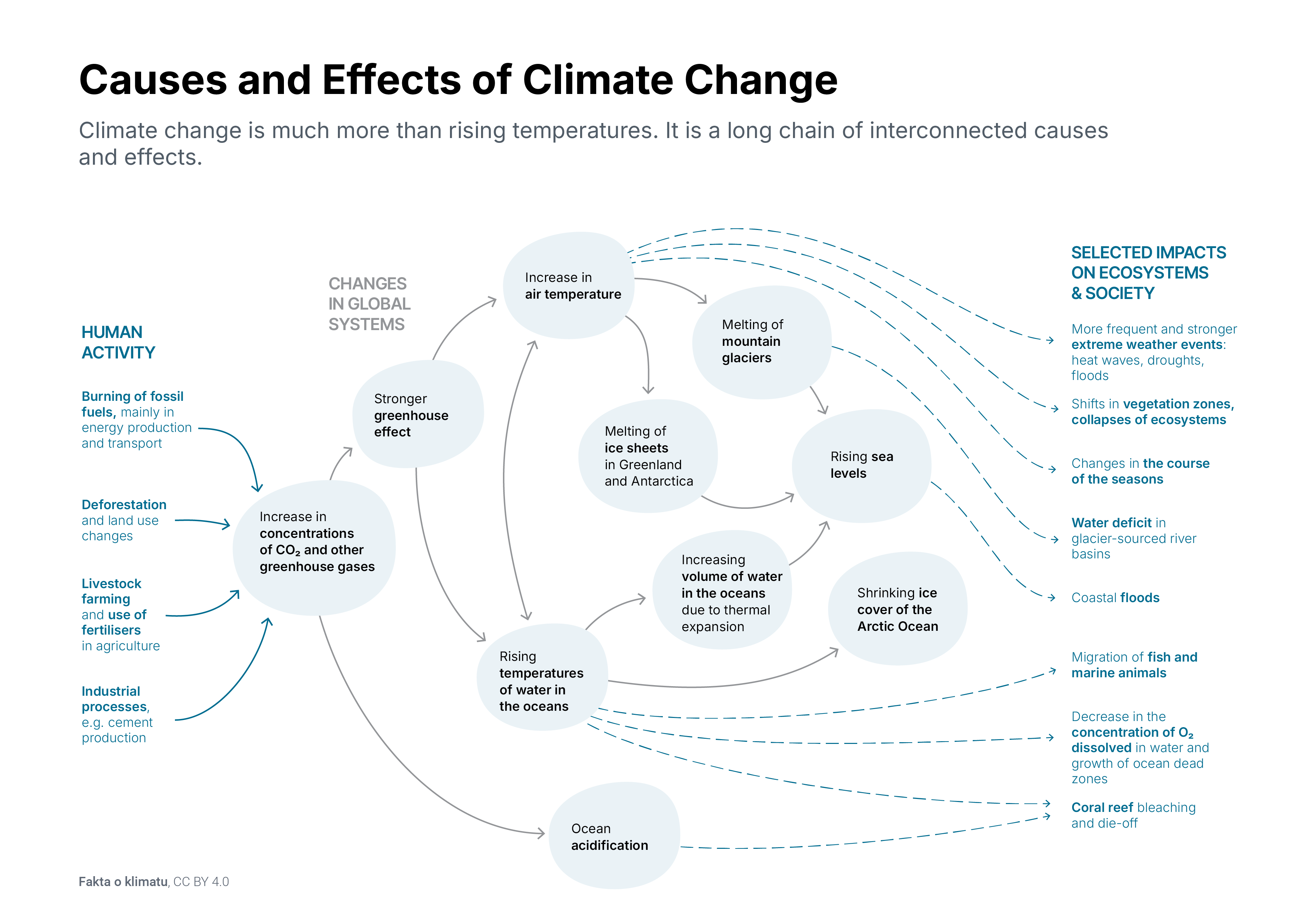
Causes and Effects of Climate Change
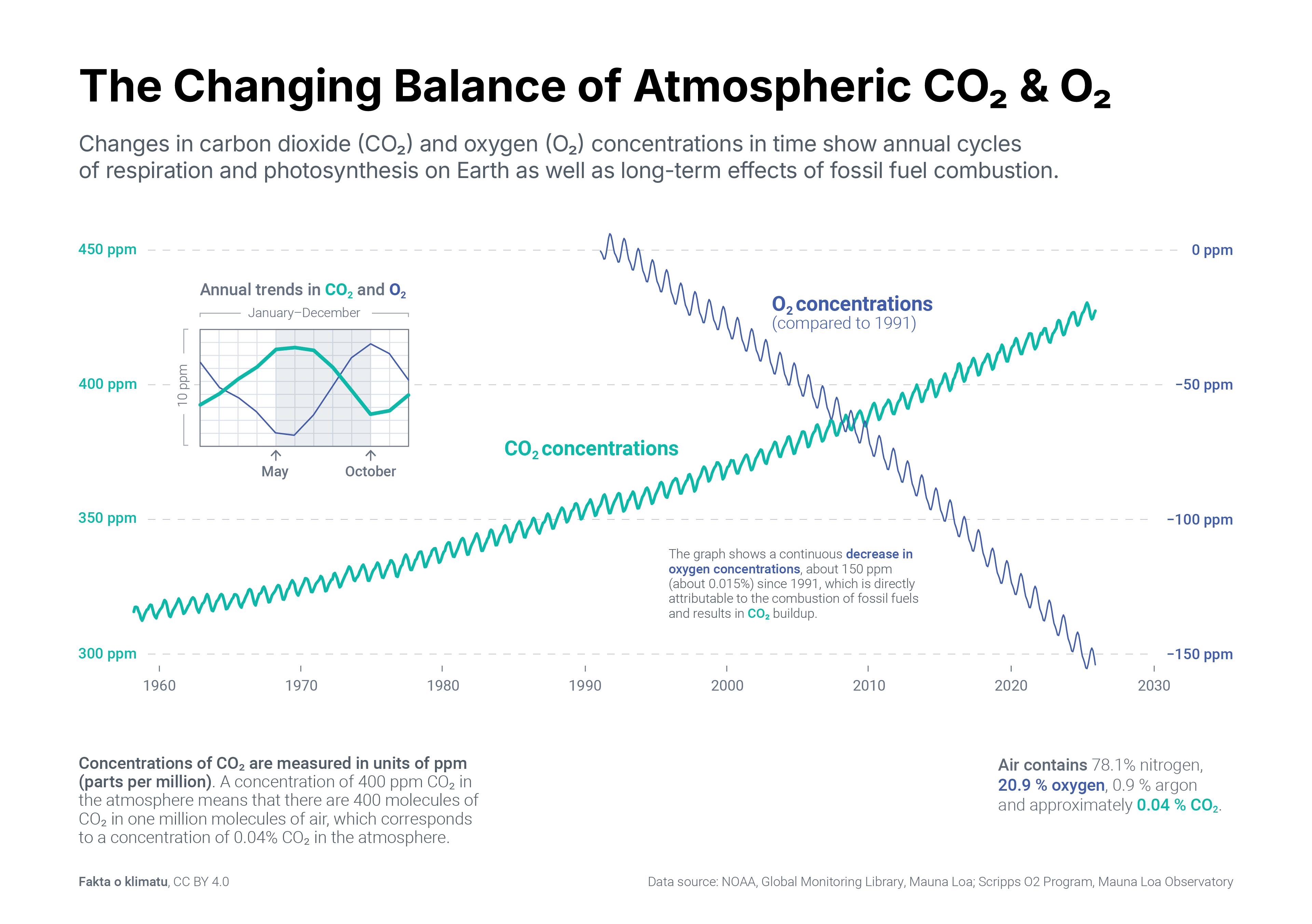
The concentration of atmospheric CO₂ today is the highest since the dawn of humanity.
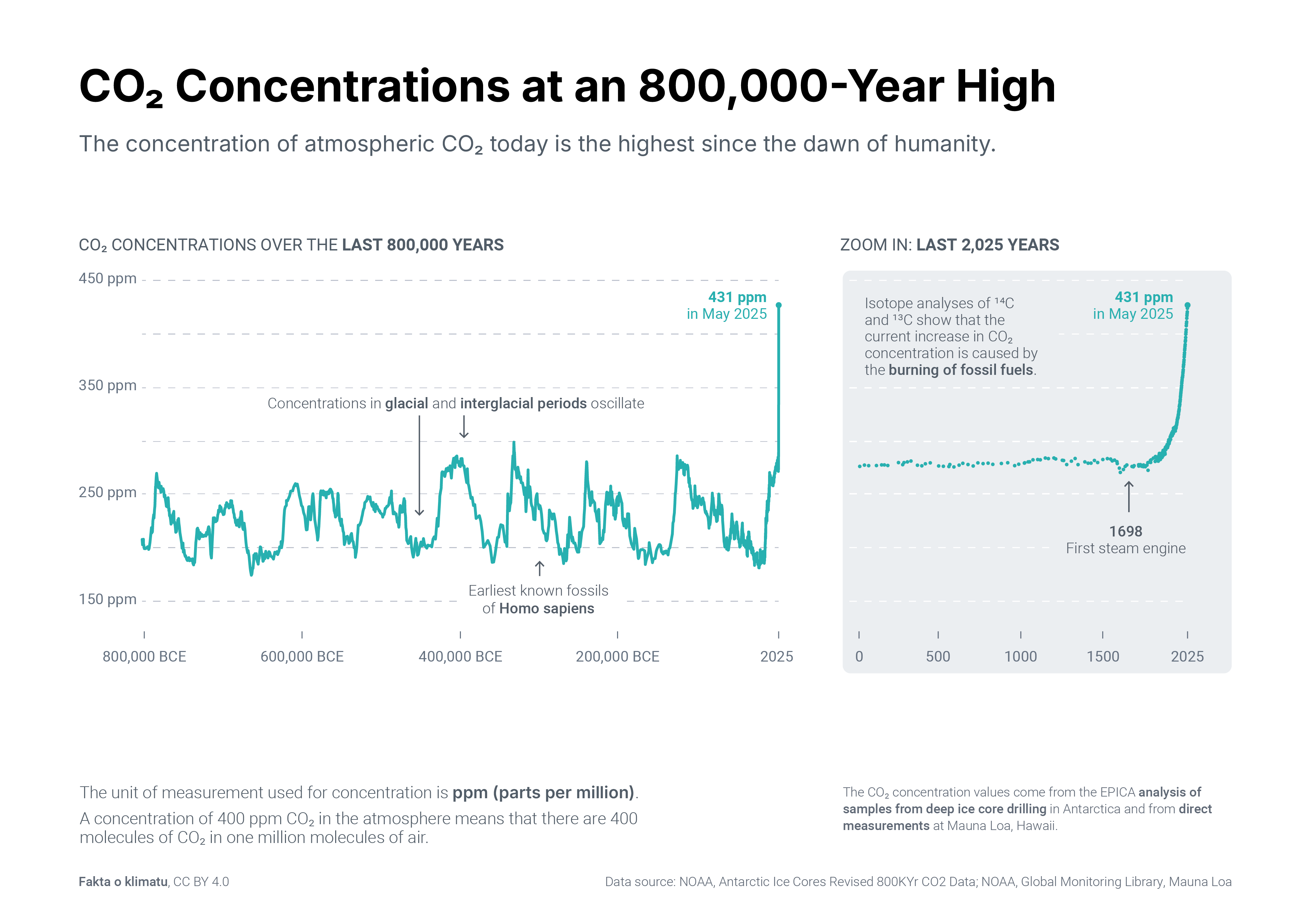
Changes in carbon dioxide (CO₂) and oxygen (O₂) concentrations in time show annual cycles of respiration and photosynthesis on Earth as well as long-term effects of fossil fuel combustion.
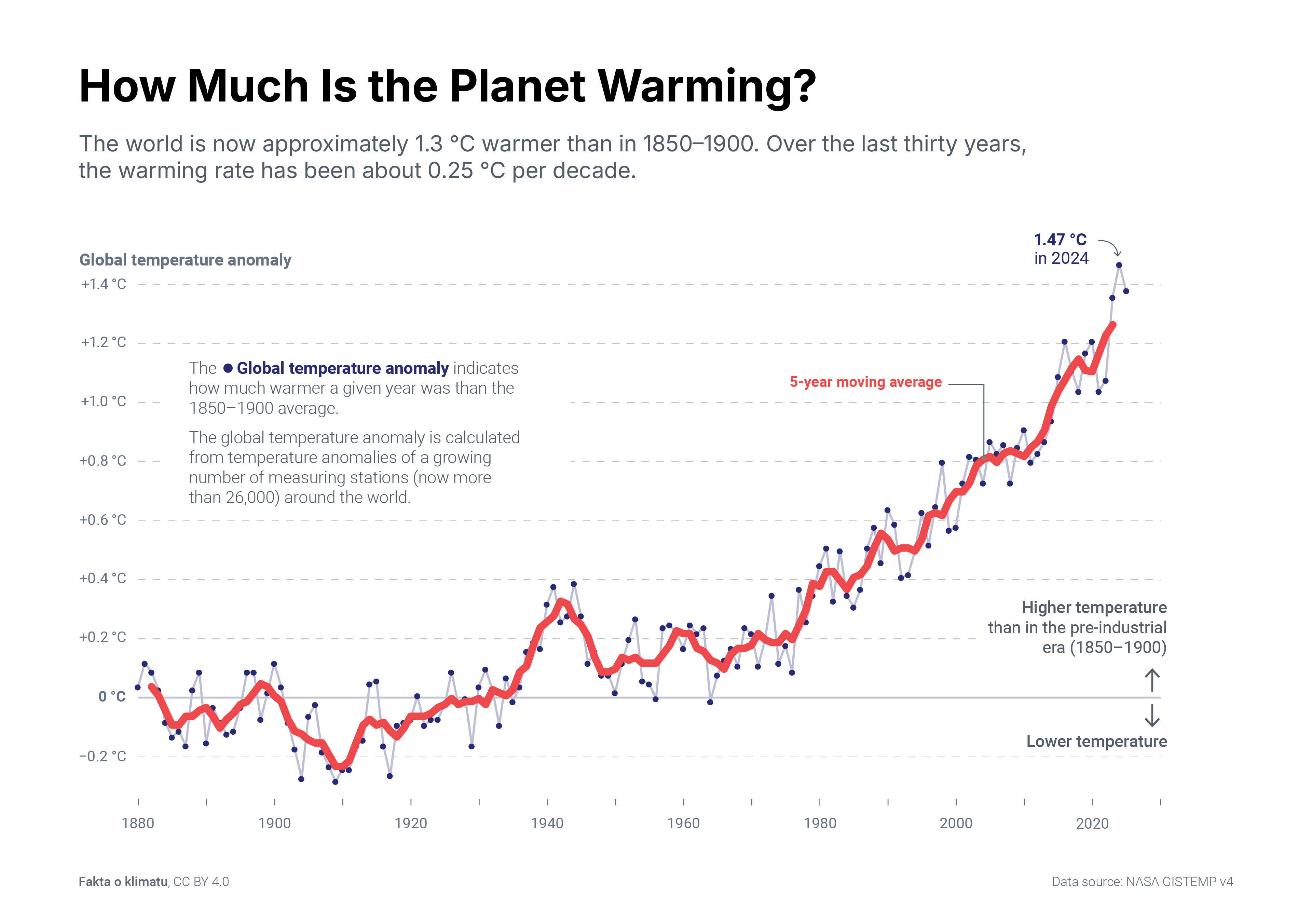
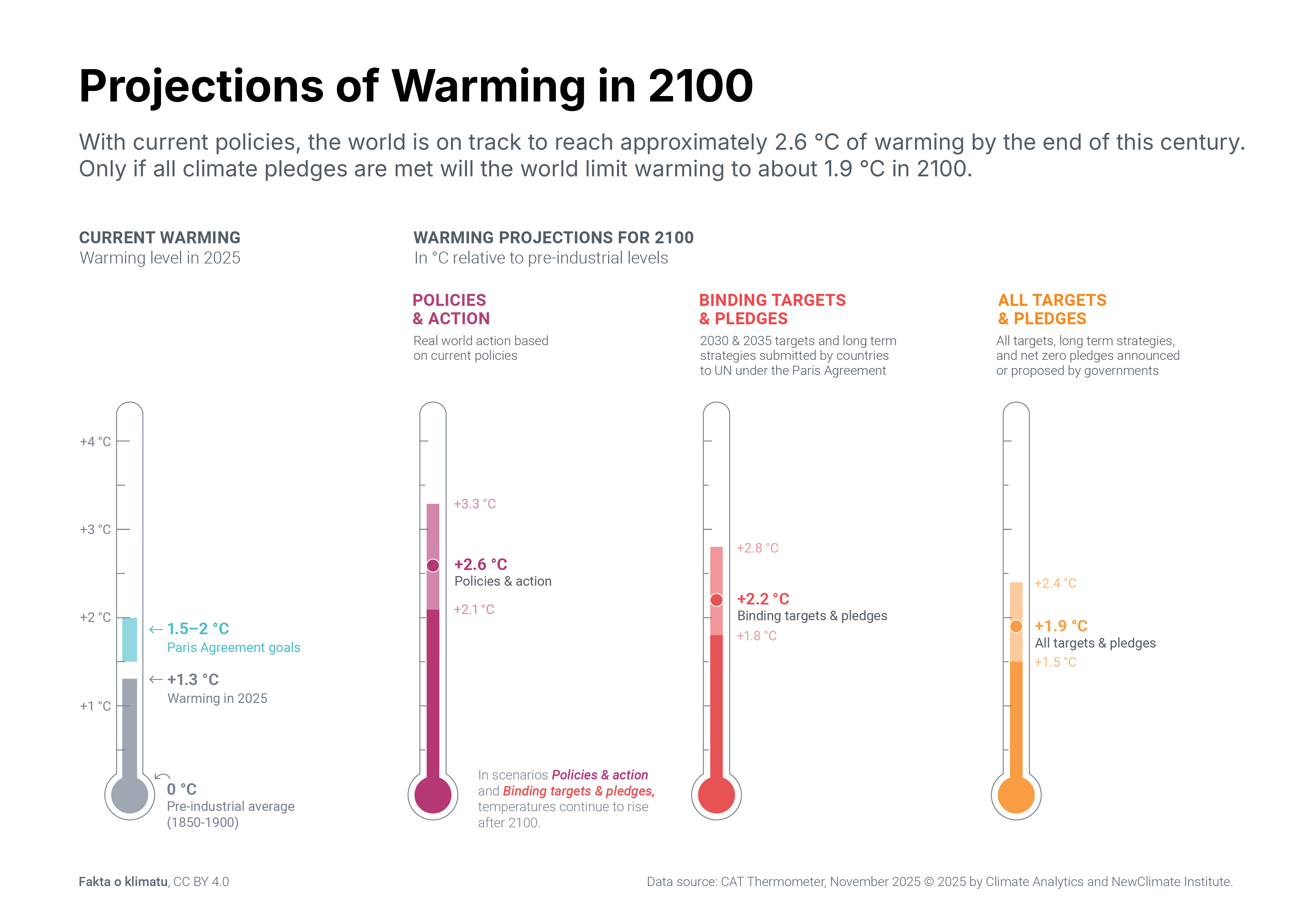
The world is now approximately 1.3 °C warmer than in 1850–1900. Over the last thirty years, the warming rate has been about 0.25 °C per decade.
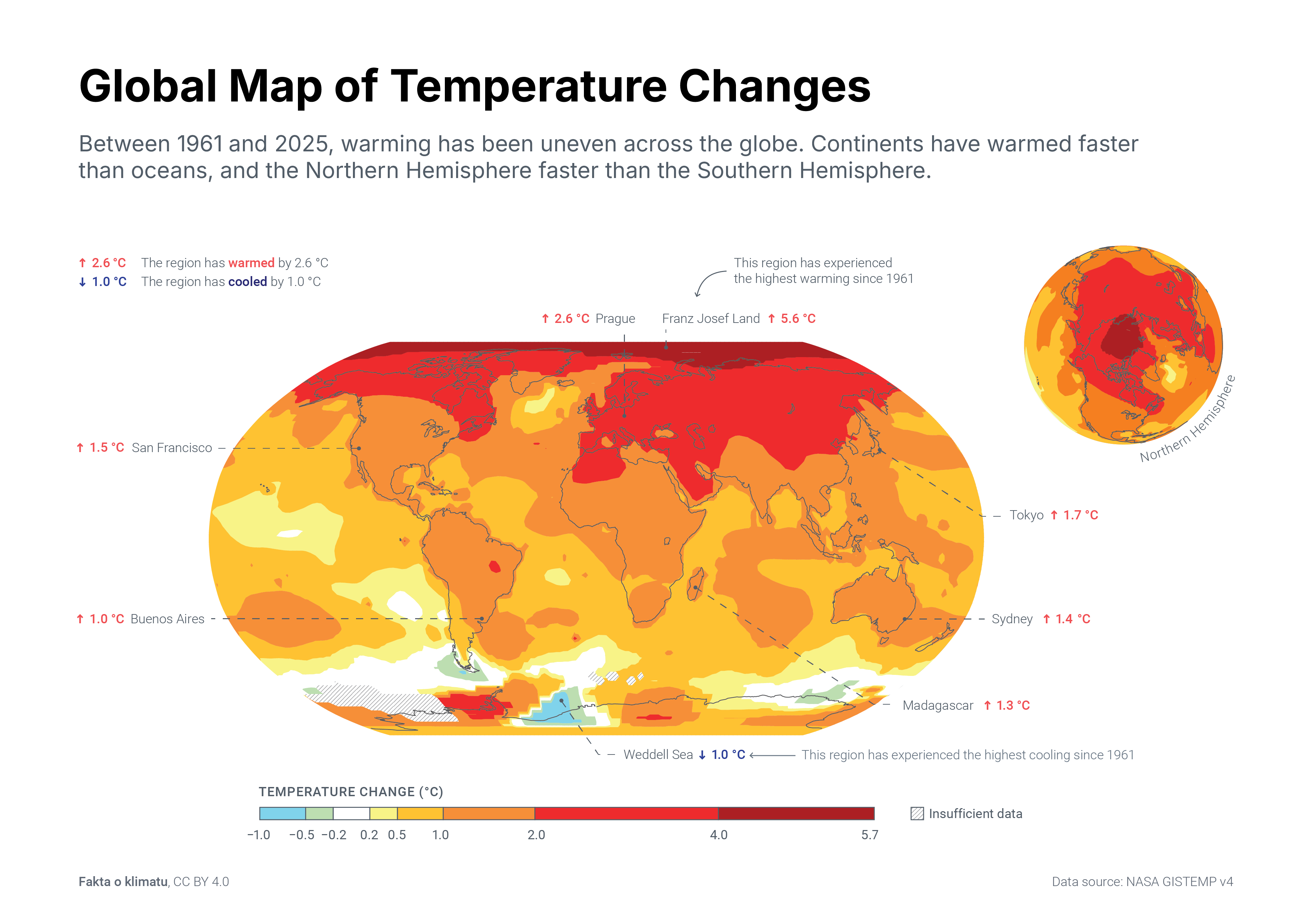
Between 1961 and 2025, warming has been uneven across the globe. Continents have warmed faster than oceans, and the Northern Hemisphere faster than the Southern Hemisphere.
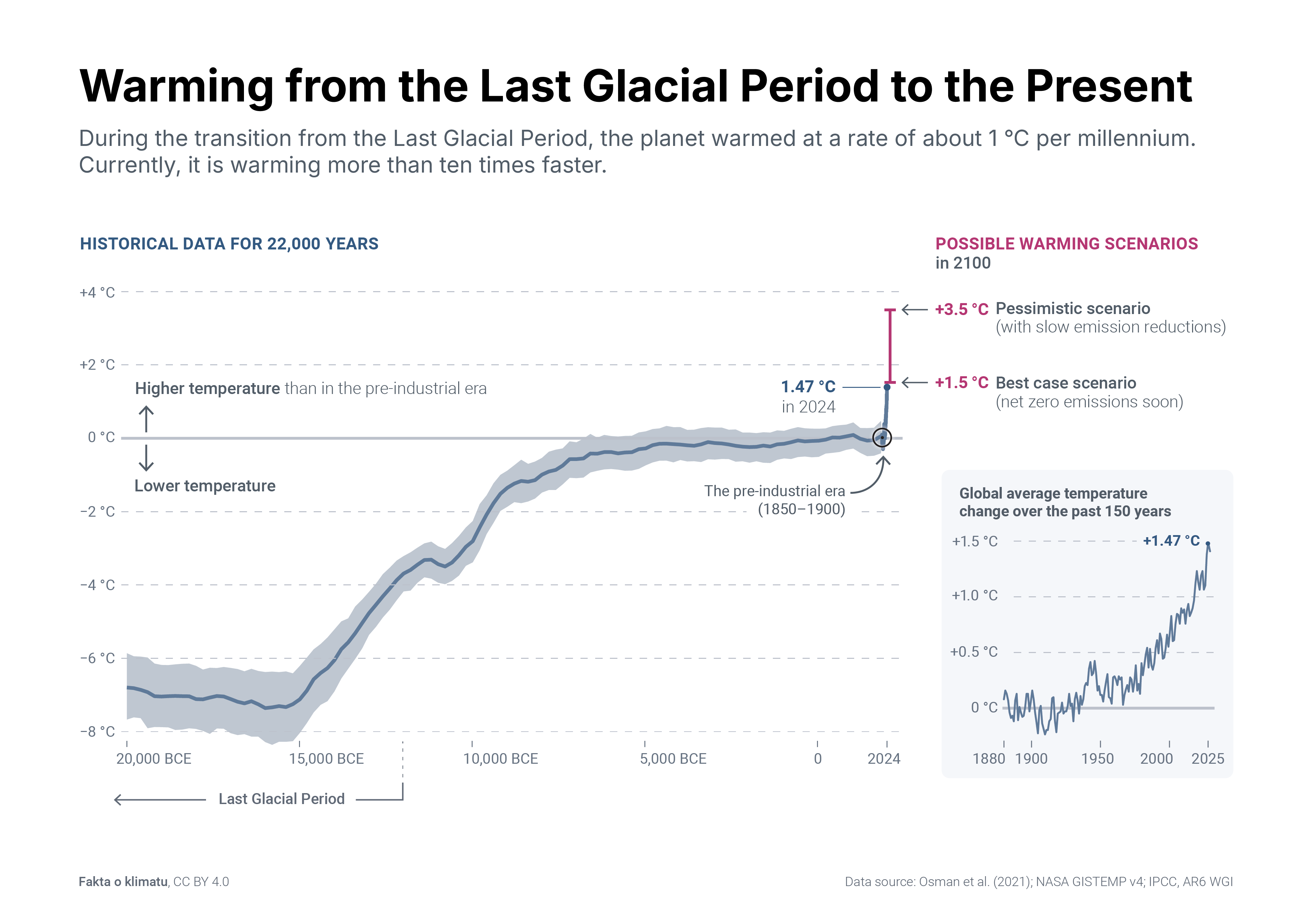
During the transition from the Last Glacial Period, the planet warmed at a rate of about 1 °C per millennium. Currently, it is warming more than ten times faster.
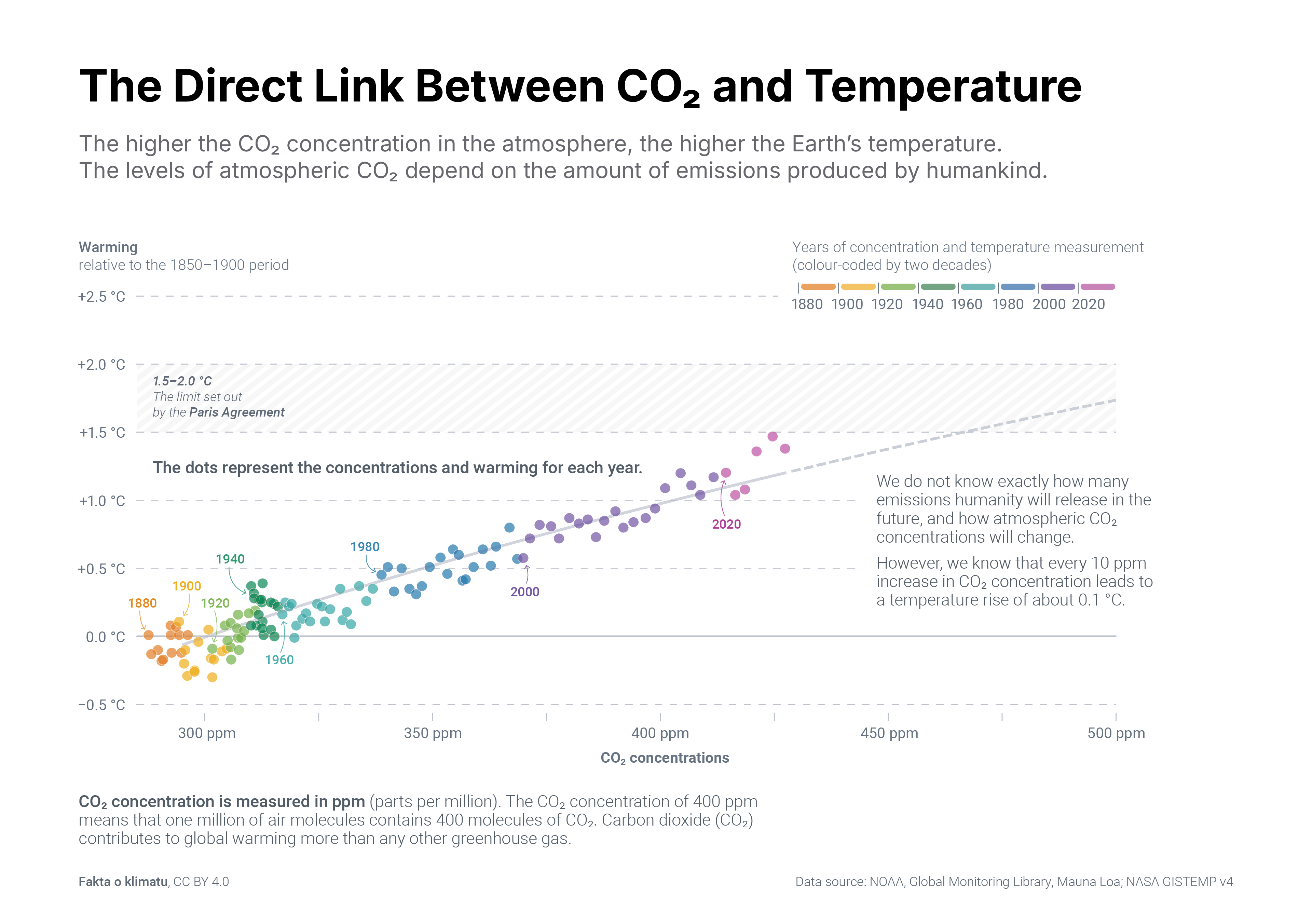
The higher the CO₂ concentration in the atmosphere, the higher the Earth's temperature. The levels of atmospheric CO₂ depend on the amount of emissions produced by humankind.
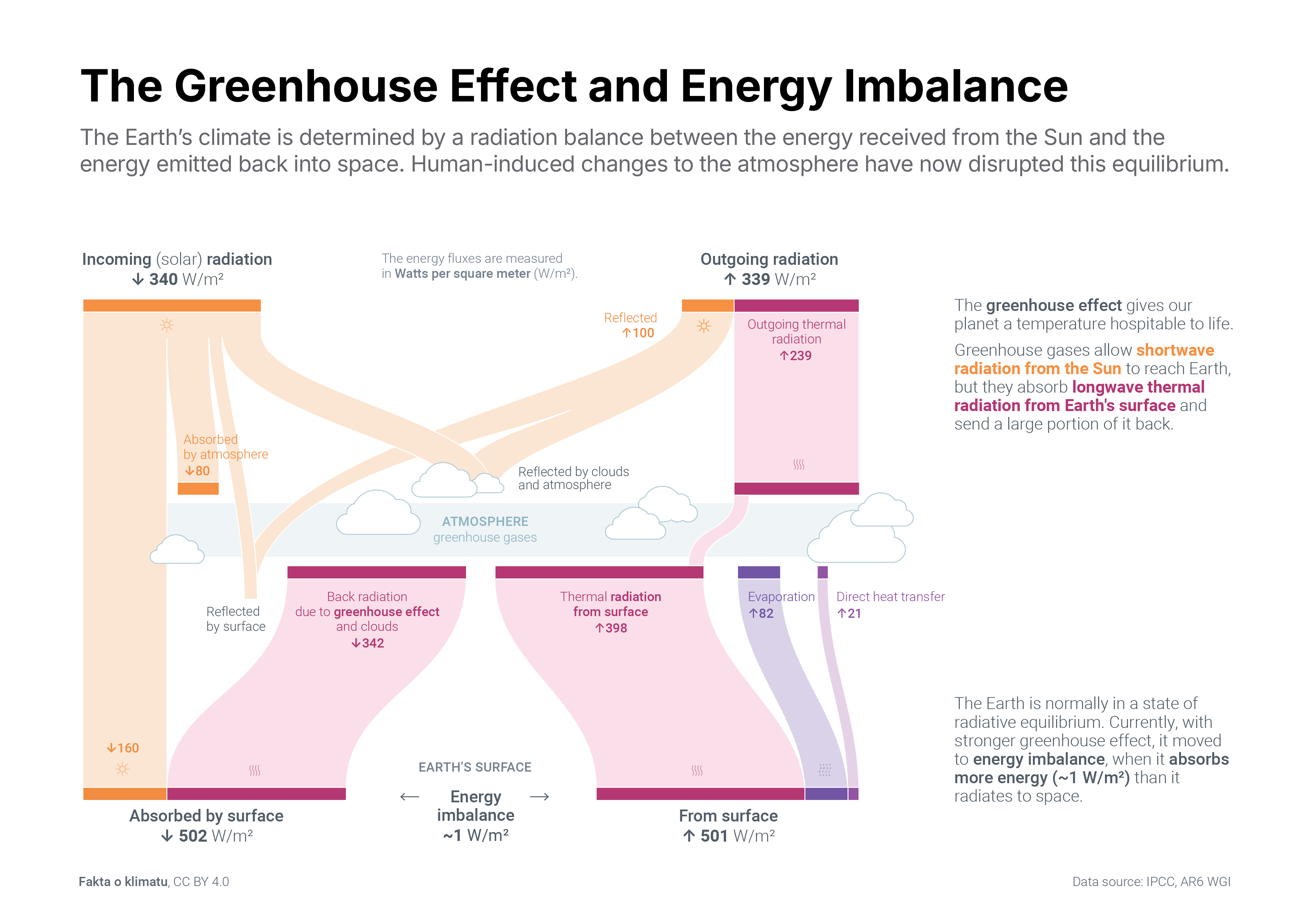
The Earth's climate is determined by a radiation balance between the energy received from the Sun and the energy emitted back into space. Human-induced changes to the atmosphere have now disrupted this equilibrium.
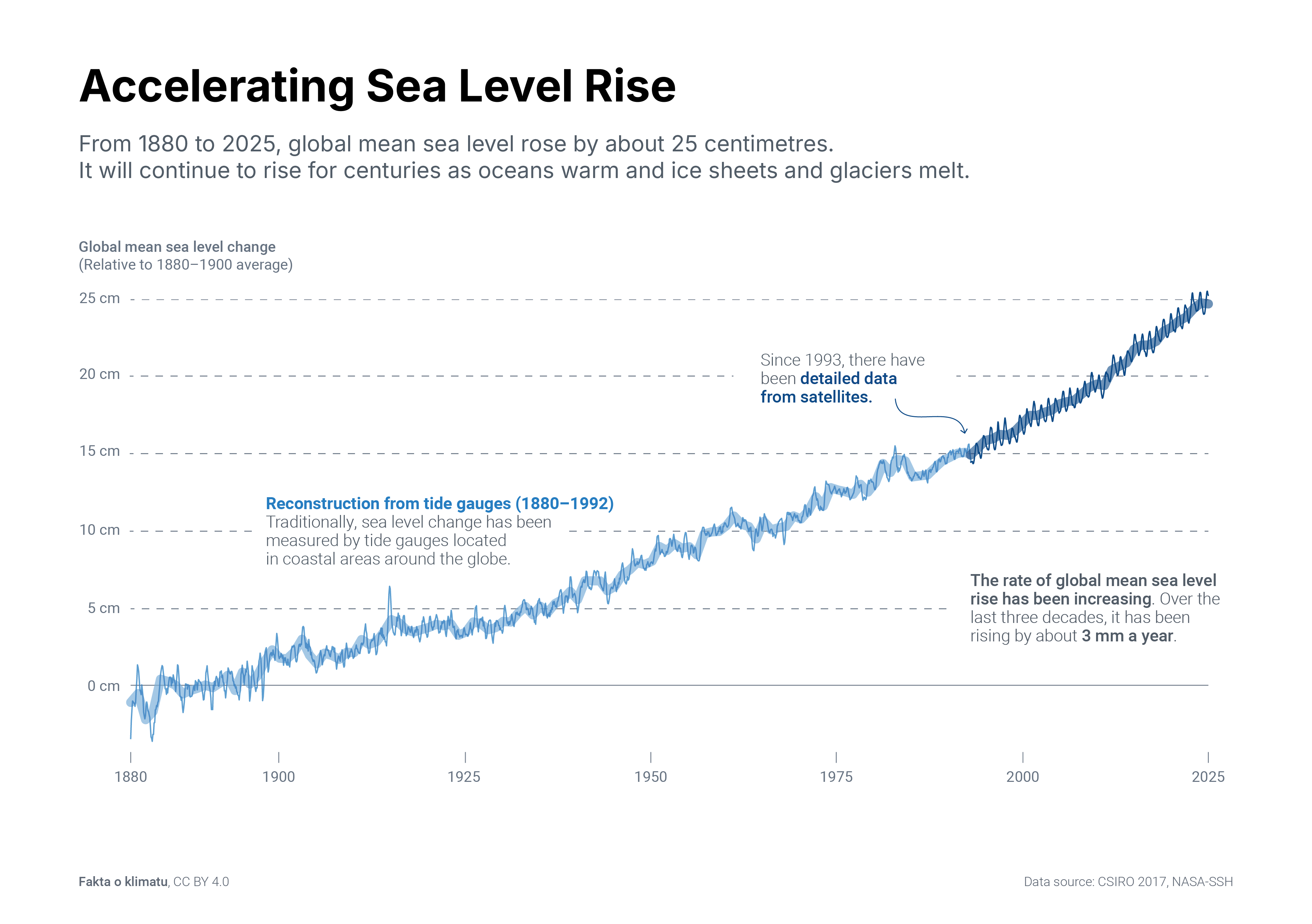
From 1880 to 2025, global mean sea level rose by about 25 centimetres. It will continue to rise for centuries as oceans warm and ice sheets and glaciers melt.
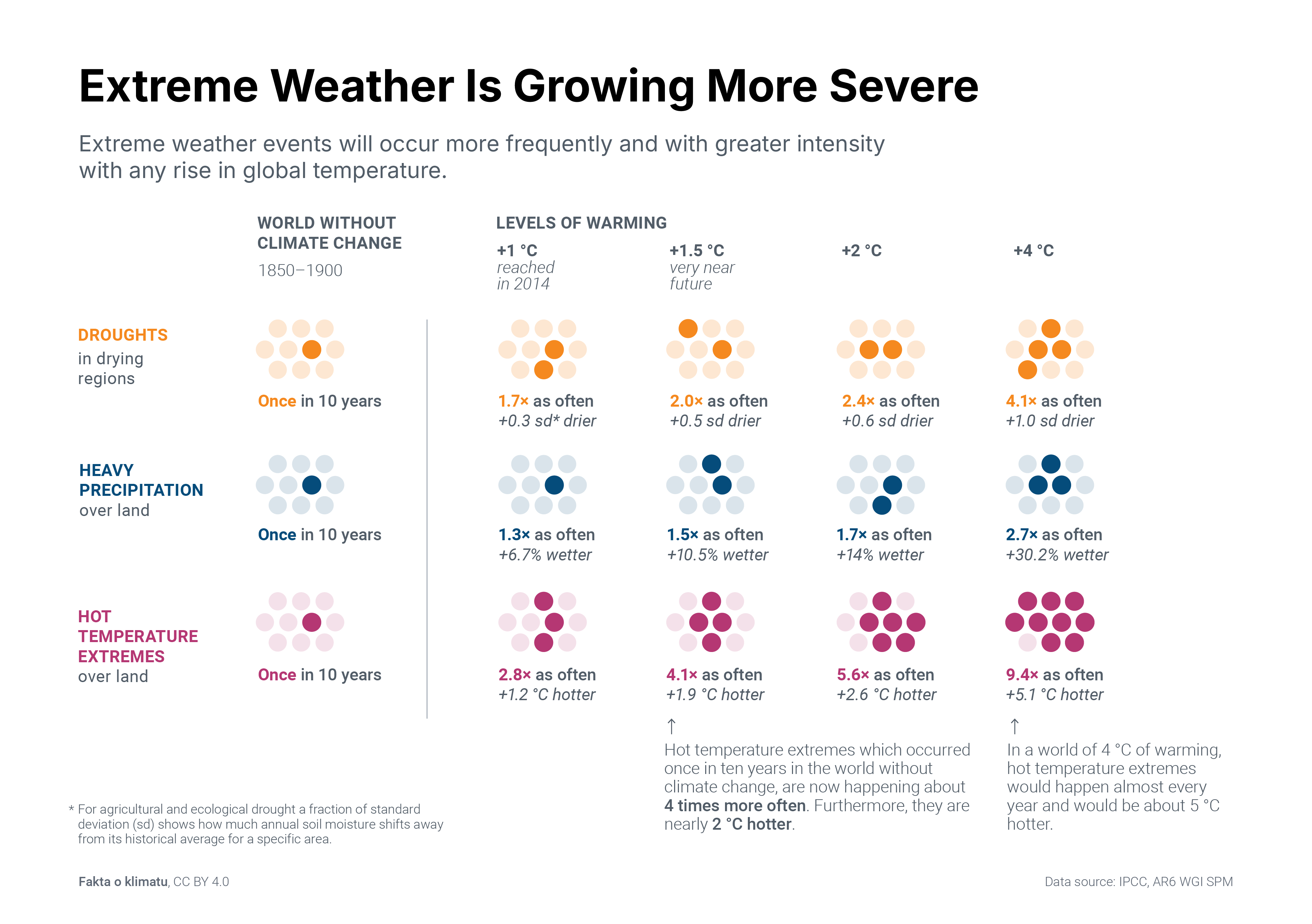
Extreme weather events will occur more frequently and with greater intensity with any rise in global temperature.
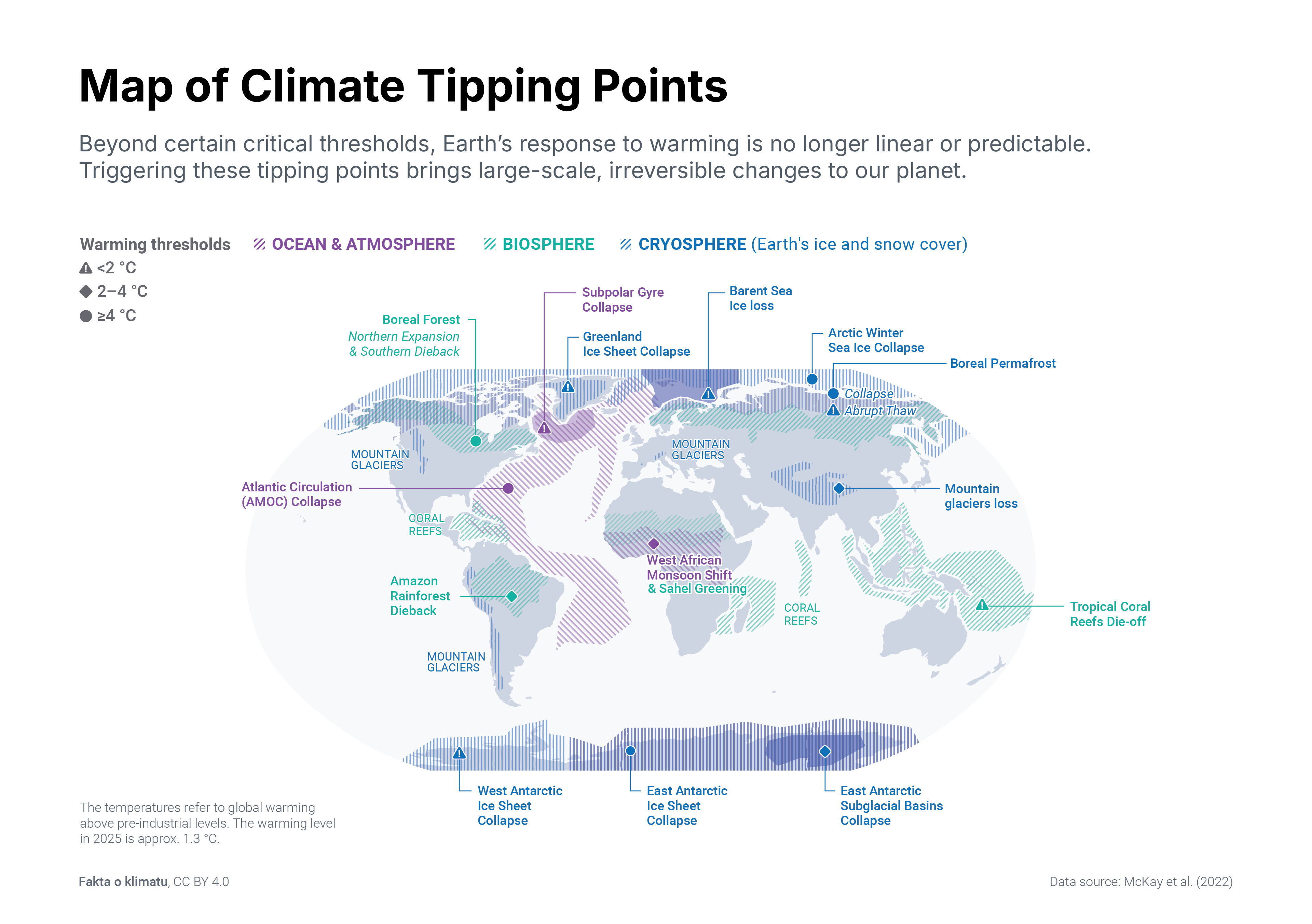
Beyond certain critical thresholds, Earth's response to warming is no longer linear or predictable. Triggering these tipping points brings large-scale, irreversible changes to our planet.
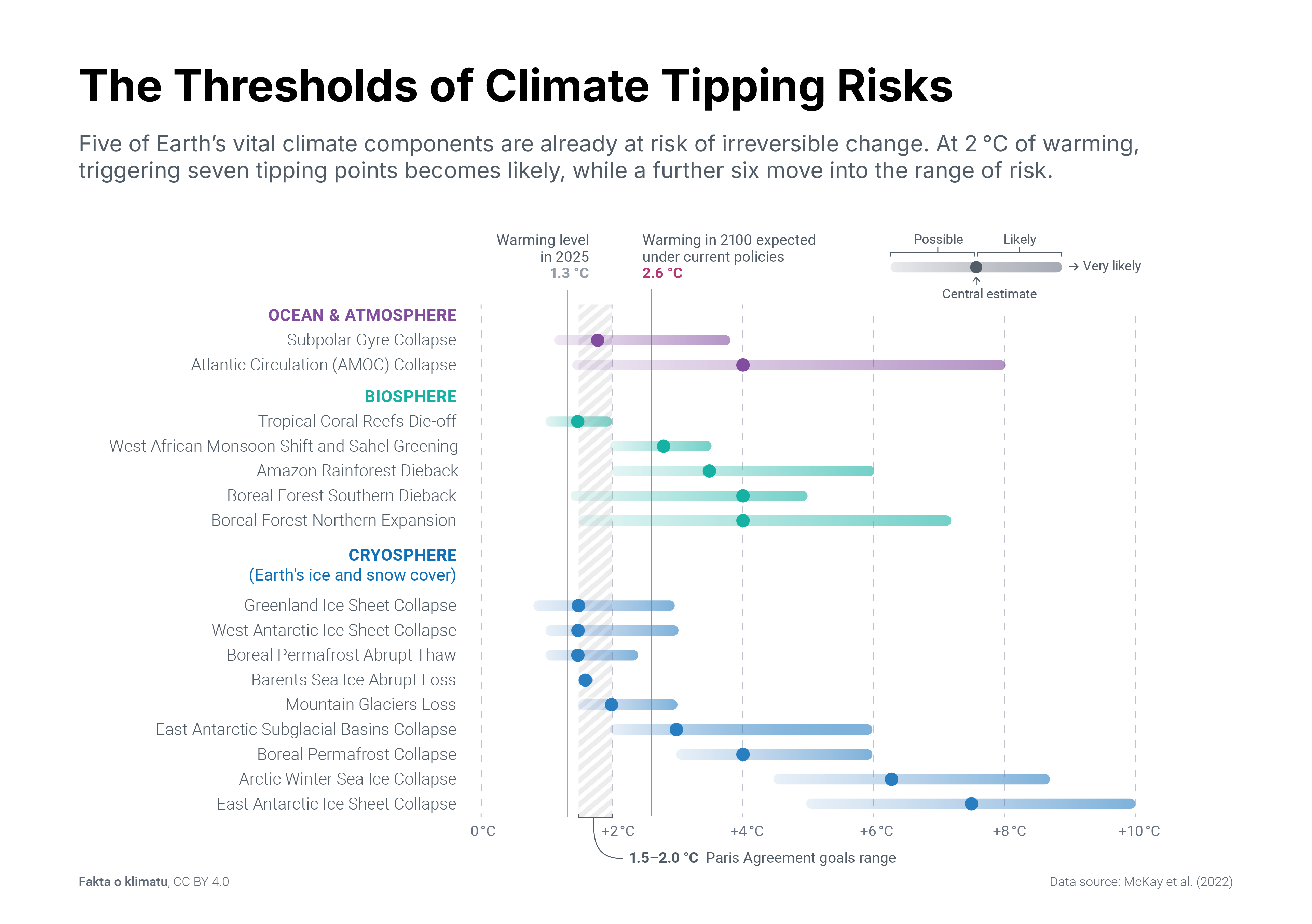
Five of Earth's vital climate components are already at risk of irreversible change. At 2 °C of warming, triggering seven tipping points becomes likely, while a further six move into the range of risk.
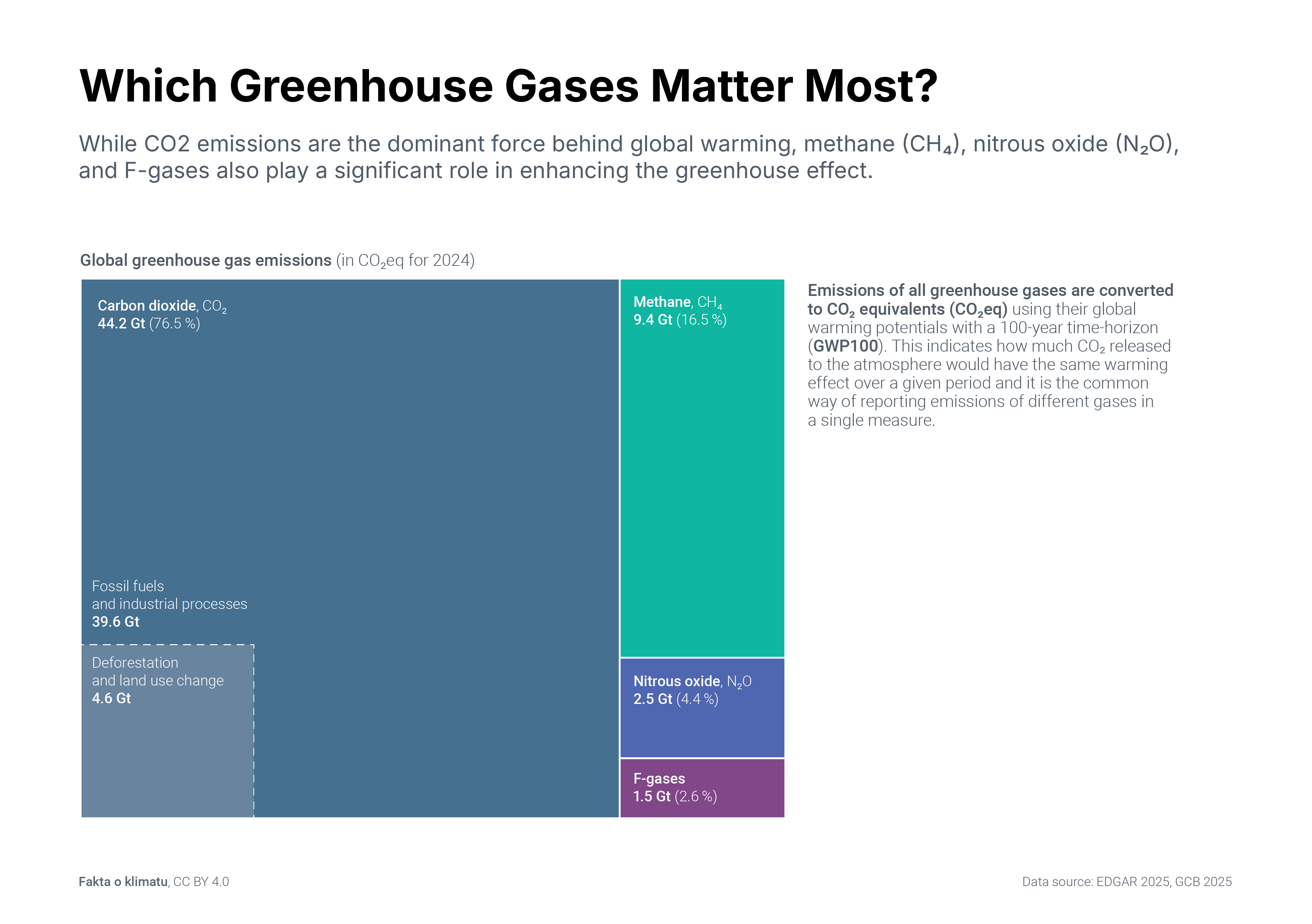
While CO₂ emissions are the dominant force behind global warming, methane (CH₄), nitrous oxide (N₂O), and F-gases also play a significant role in enhancing the greenhouse effect.
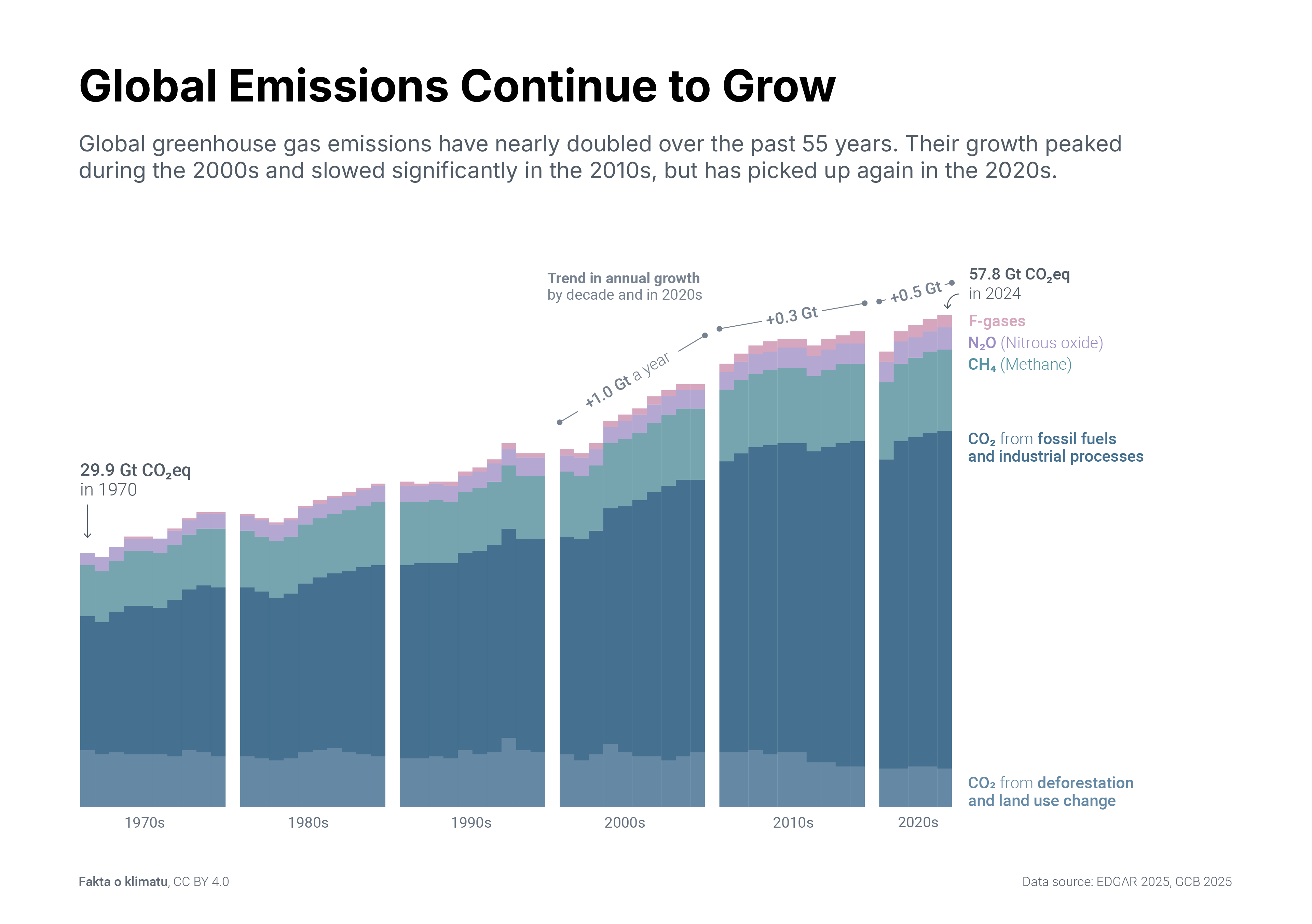
Global greenhouse gas emissions have nearly doubled over the past 55 years. Their growth peaked during the 2000s and slowed significantly in the 2010s, but has picked up again in the 2020s.
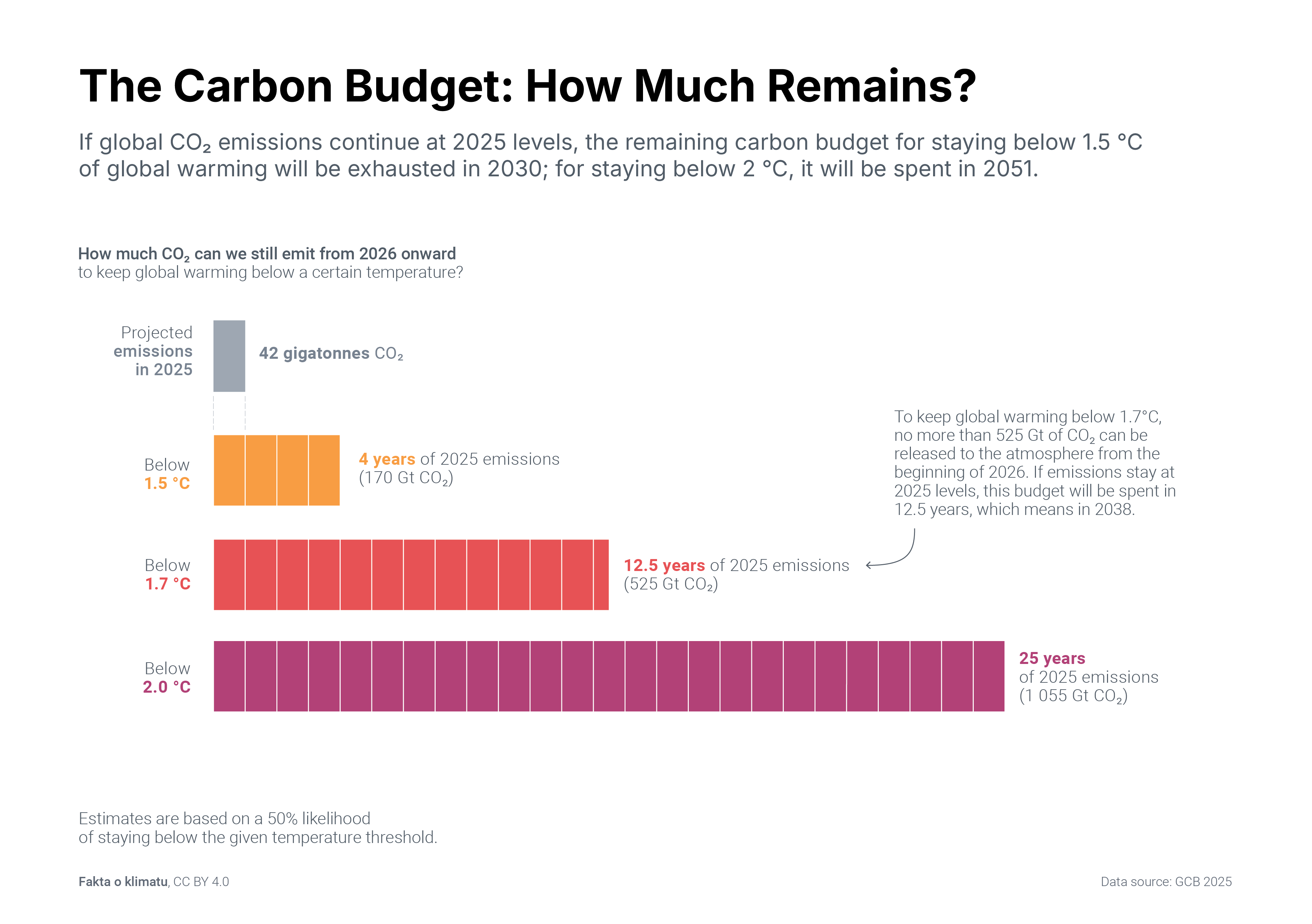
If global CO₂ emissions continue at 2025 levels, the remaining carbon budget for staying below 1.5 °C of global warming will be exhausted in 2030; for staying below 2 °C, it will be spent in 2051.
With current policies, the world is on track to reach approximately 2.6 °C of warming by the end of this century. Only if all climate pledges are met will the world limit warming to about 1.9 °C in 2100.
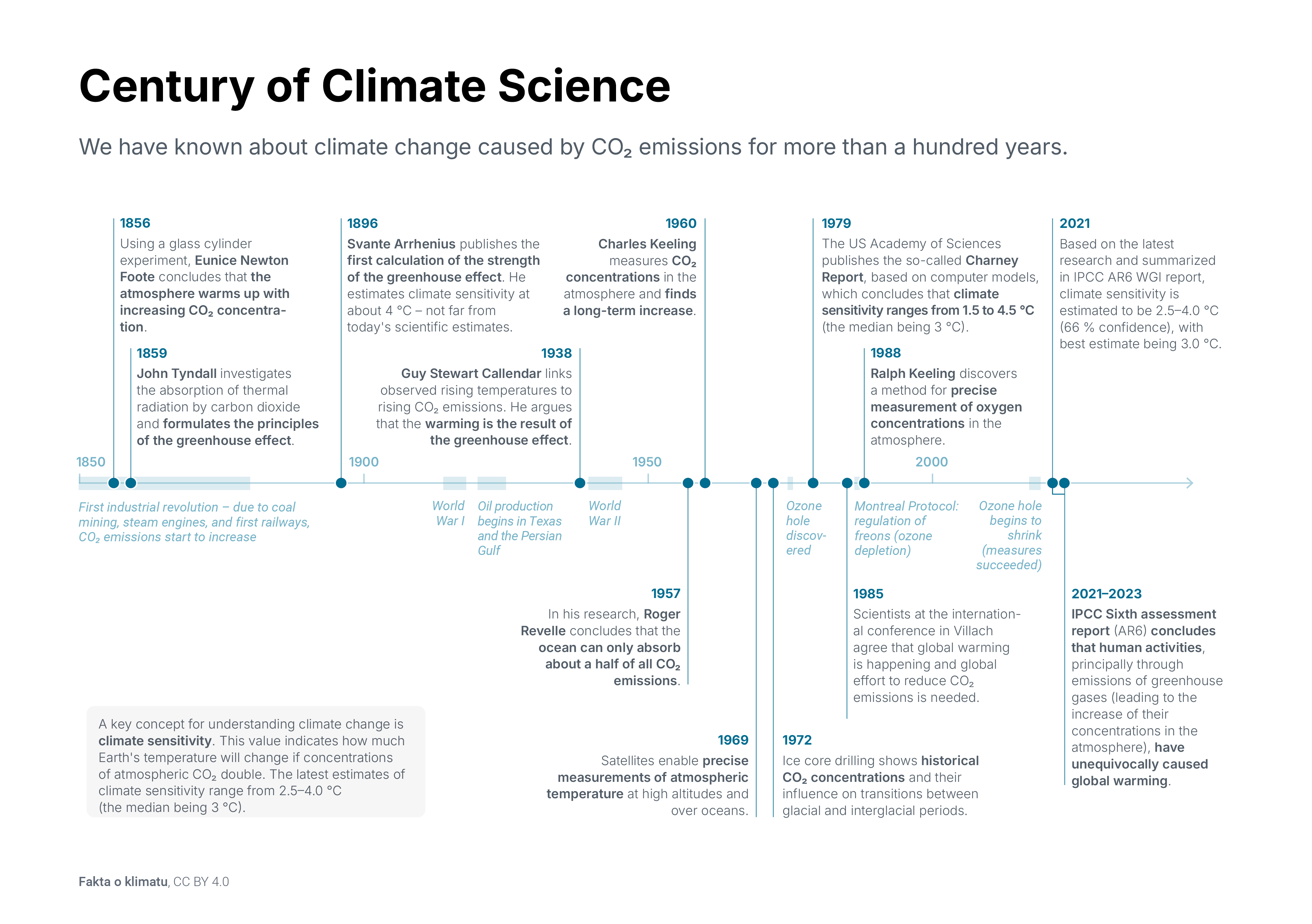
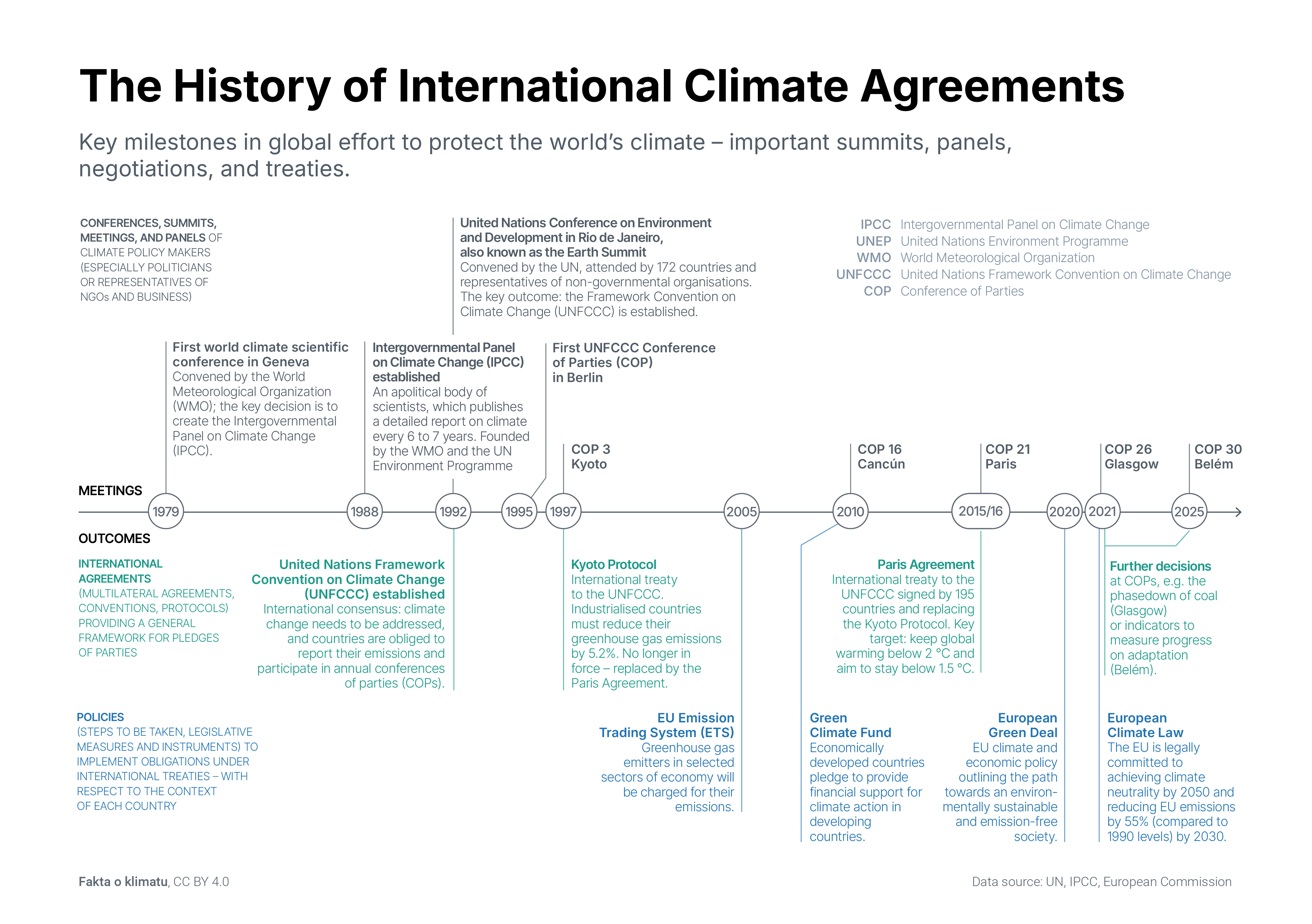
Key milestones in global effort to protect the world's climate – important summits, panels, negotiations, and treaties.
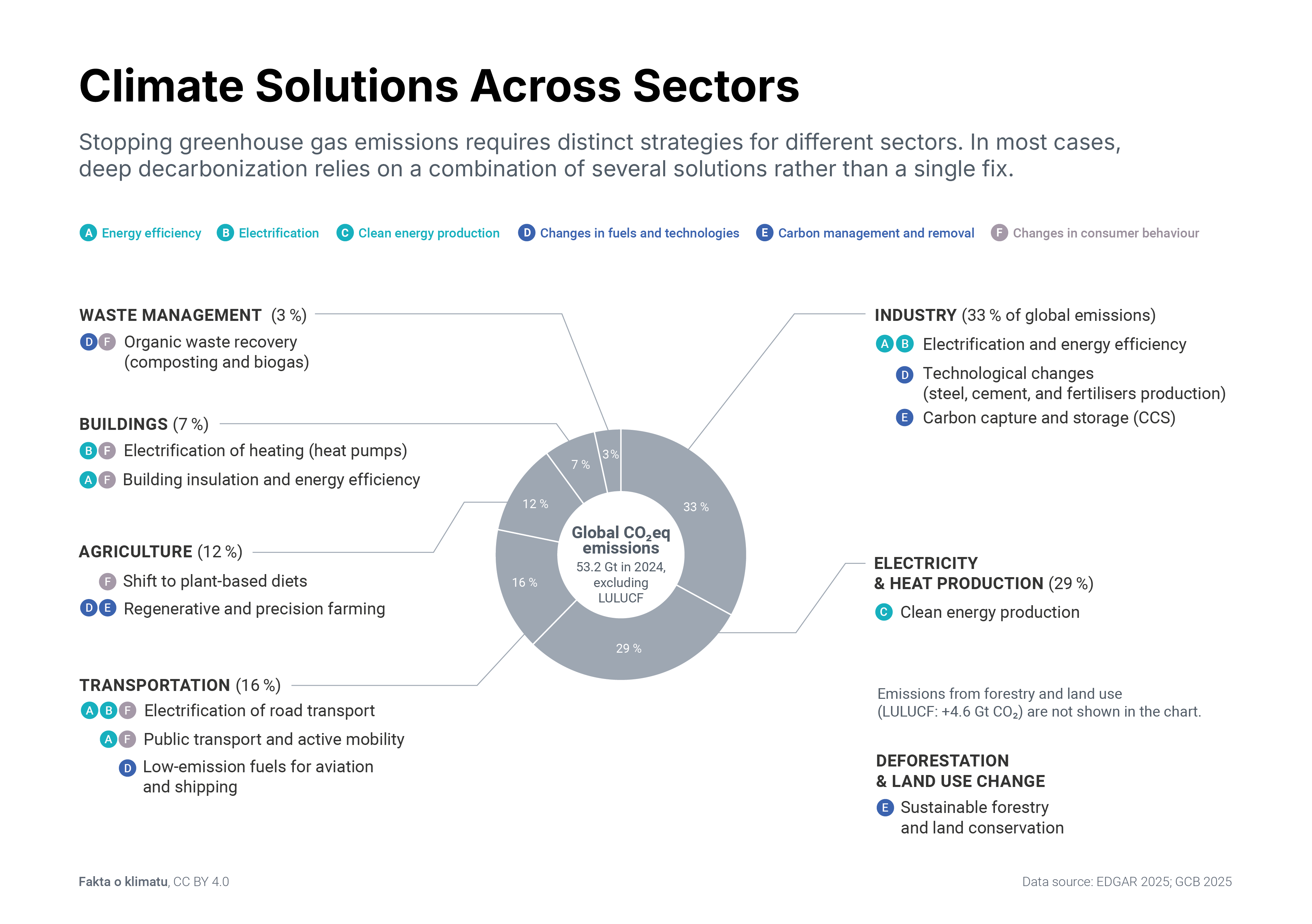
Stopping greenhouse gas emissions requires distinct strategies for different sectors. In most cases, deep decarbonization relies on a combination of several solutions rather than a single fix.
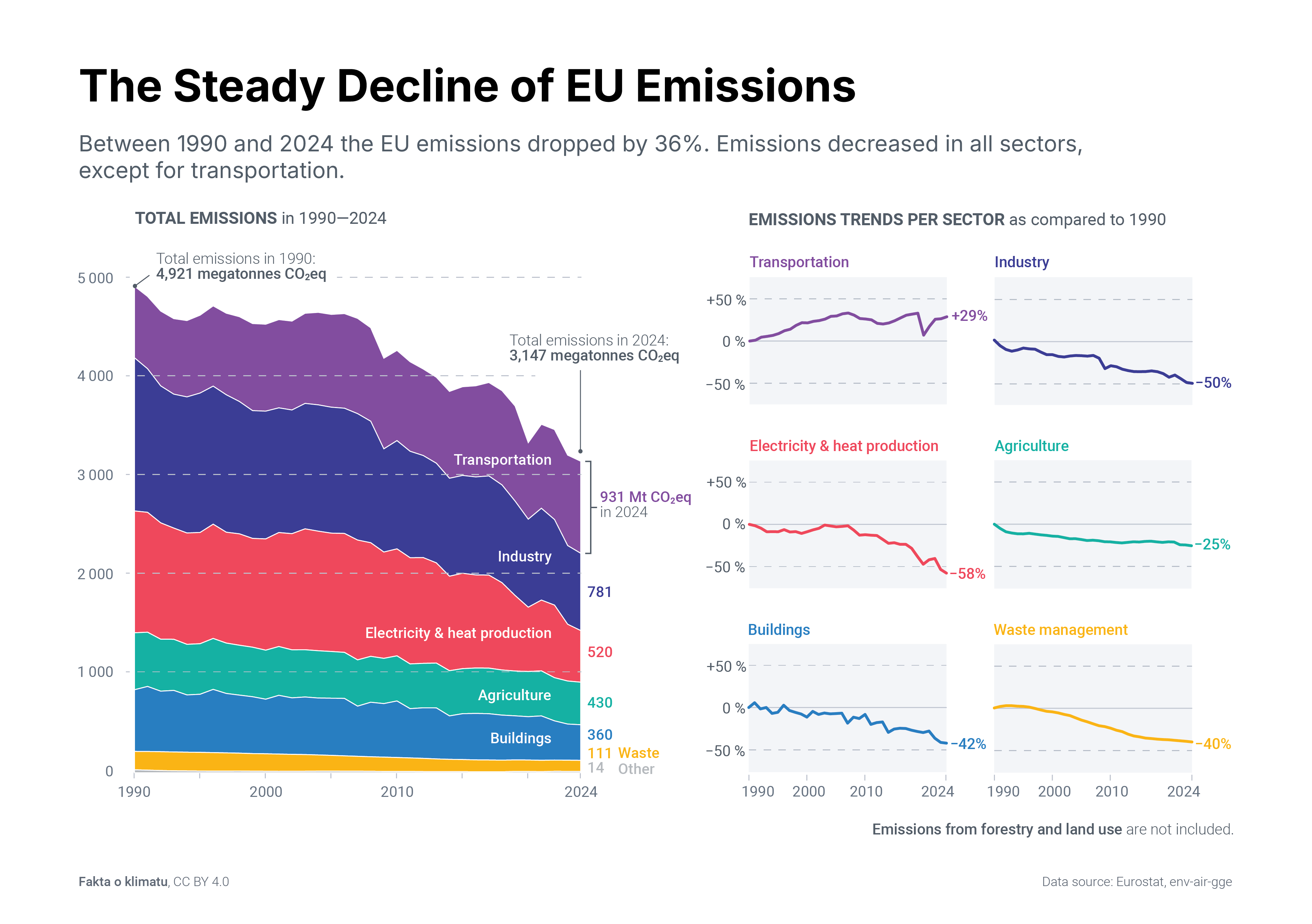
Between 1990 and 2024 the EU emissions dropped by 36%. Emissions decreased in all sectors, except for transportation.
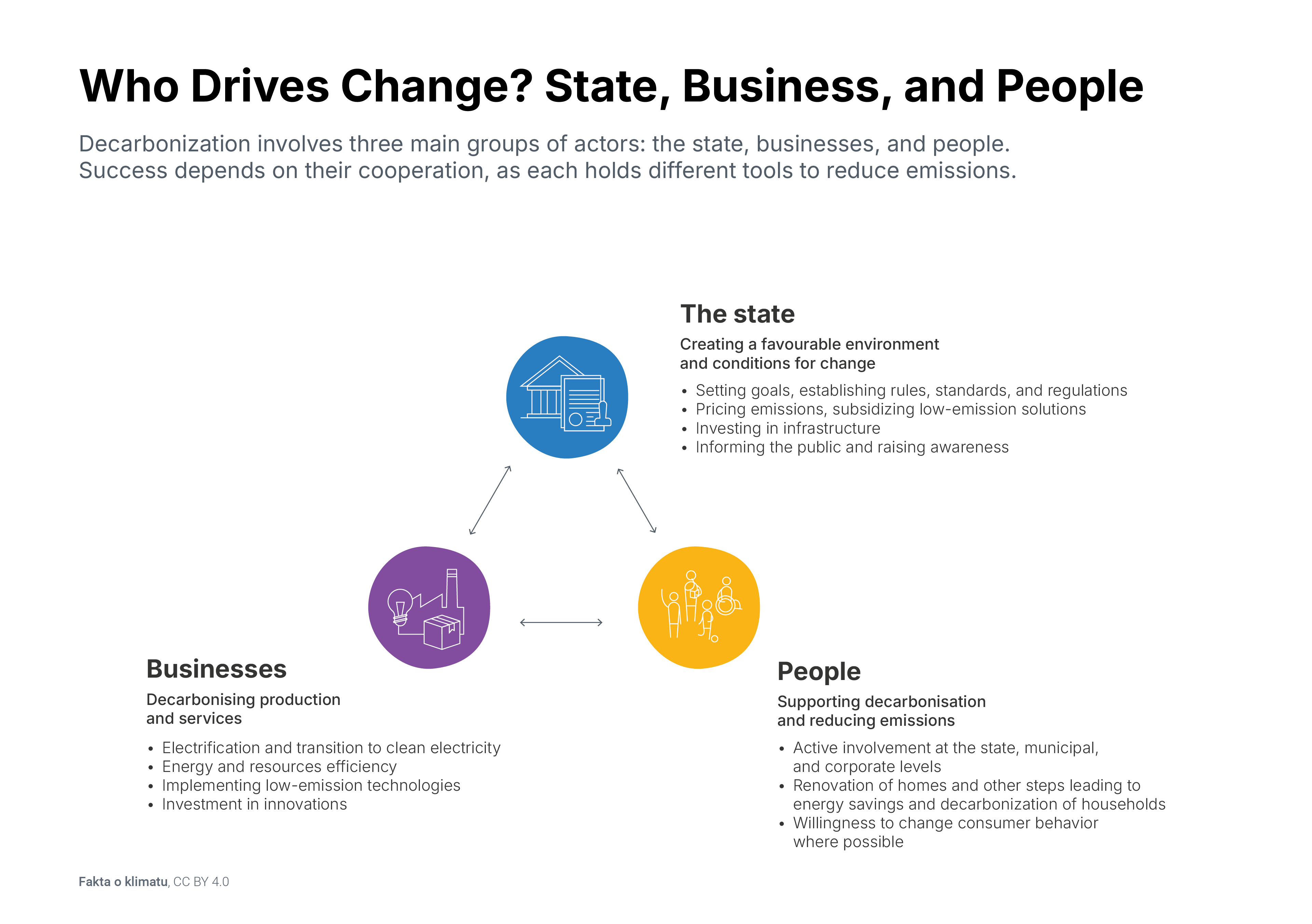
Decarbonization involves three main groups of actors: the state, businesses, and people. Success depends on their cooperation, as each holds different tools to reduce emissions.